EN
EN



News
What Are Common Issues in Camshaft Machining?
Surface Finish Imperfections Affecting Performance
In camshaft machining, inconsistent surface finish is one of the most common challenges encountered. Smooth and precise surfaces must be achieved in order for the camshaft to work with the valve lifters and maintain the timing of the engine. Any damaged surface, even the most minor ones like tool marks, chatter, or uneven material removal, can lead to engine inefficiencies and increased friction and wear over time. Outdated machining tools, non-ideal cutting parameters, or inadequate workpiece stabilization can result in these issues. For example, if the cutting tool is dull, the camshaft’s lobes will have unrefined edges. If there is too much vibration in the machining process, the surfaces will have waviness that will affect the proper contact with other engine components. To solve these problems, surface finish can be improved through tool servicing and maintenance, and optimal cutting speed and feed, and improved camshaft processed clamping systems.Dimensional Accuracy Problems
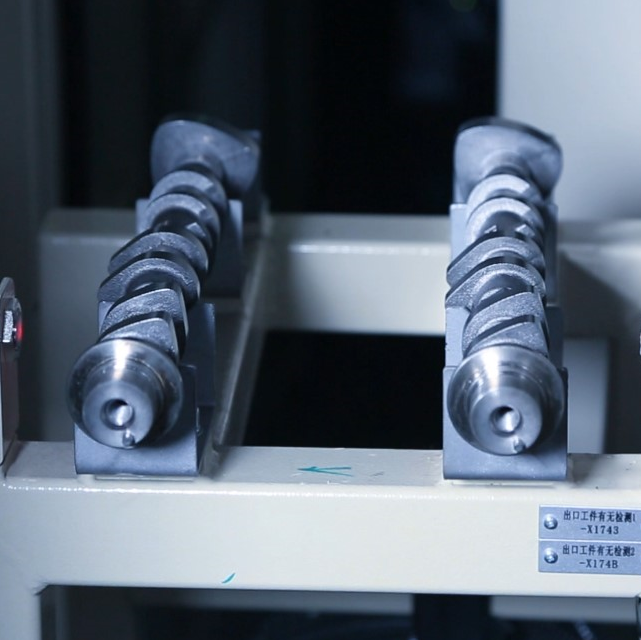
For camshafts, tight dimensional tolerances are crucial, as even small inaccuracies can disrupt engine timing and lead to performance problems. Some common dimensional issues include improper lobe heights, uneven base circle diameters, and keyway misalignment. These problems are often caused by the thermal expansion of the workpiece—machining camshafts made of alloy steel can lead to cuts that are accurate during processing but fall out of tolerance when the workpiece cools. Improper equipment calibration can also be a cause; CNC machines and measuring devices that are not calibrated regularly can generate work that is out of the required tolerances. An example is a camshaft whose lobe height is 0.05mm under specification, which would result in the engine valves not opening fully, leading to a loss of power and increased fuel consumption. To address precision issues, manufacturers rely on temperature-controlled machining, high-precision measuring devices like coordinate measuring machines, and real-time critical dimension monitoring during machining.
Defects in Materials Affecting Durability
Camshafts face extreme loads and stresses when engines are in operation. Consequently, any material defects in the workpiece can greatly lessen the camshaft’s durability. Common material-related defects include inclusions, porosity , and variable hardness issues from uneven heat treatment. Inclusions, such as dirt or oxide inclusions, and other porosity defects can create weak camshaft areas that will crack under load; porosity will also promote oil leakage and corrosion in the camshaft as time passes. Irregular heat treatment will cause surface camshaft hardness to erratically vary which means softer areas will wear faster and the harder areas will become brittle and likely chip off. For illustration, a camshaft with a porous lobe may develop oil pockets that reduce lubrication, causing excessive wear on the camshaft and valve lifters. To avoid these defects in materials, the manufacturers must ensure that they procure such raw materials from trustworthy vendors, perform comprehensive pre-machining inspections, and adhere to precise heat treatments to achieve uniform hardness and strength.
Wear and Tear on Machining Tools
The machining tools for camshafts consist of end mills, turning inserts, and grinding wheels which experience wear that may affect the quality of the camshaft and the efficiency of the entire machining. While tools wear, cuts through the material require greater force which leads to problems with surface finish or dimensions. A grinding wheel that has been worn may result in uneven material removal which leads to the camshaft having uneven lobe profiles. Increased wear on the tools results in more time and costs for machining since there is more frequent need for replacement. Tool wear is accelerated, for example, in the case of using high-speed steel tools on hardened steel camshaft alloy, excessive feed rates, or lack of cutting fluid. Manufacturers have developed measures to prolong tool life, for example, the use of tool materials that are target matched to camshaft alloys, the use of tool inserts, the application of high-performance cutting fluids to tackle heat and friction, and the implementation of tool life monitoring systems that warn users of needed tool replacement.
Assembly and Post Machining Compatibility Problems
A camshaft can still have problems even after perfect machining if it is incompatible with other engine components during assembly. Common compatibility issues comprise keyways that don’t match, incorrect spline profiles, and surface contaminants that inhibit installation. For instance, cam and crankshaft keyways that don’t fully lock in can cause slippage and timing issues. Contaminants left on the camshaft, such as machining metal chips or oil, can scratch other components during assembly, block oil passages, and cause lubrication issues. To avoid assembly compatibility issues, the manufacturer has firm post machining cleanup policies. They also ensure that key dimensions such as spline profiles and other fitting features have been machined to designed tolerances and clearances so the camshaft integrates with other engine parts. Modern visual inspection systems are especially helpful as they quickly and easily identify minor surface variations on fitting surfaces that are often overlooked by the naked eye or inspection tools.