EN
EN



News
How to Perform Effective Parts Cleaning?
Performing effective parts cleaning within an industrialized workflow demands a rigorous understanding of both chemistry and mechanical engineering. Across international B2B manufacturing plants, surface cleanliness acts as a foundational pre-requisite for successful electroplating, coating, welding, and final component assembly. Residual processing fluids, metal shavings, and shop dust can ruin finish quality, causing downstream adhesion failures and devastating financial consequences. Achieving the degree of industrial cleanliness required by modern technical specifications is not merely a matter of washing components; it requires an engineered, structured process.
The Technical Foundation of Pre-Wash Stage
The cleaning process begins long before components enter the primary washing tanks. Initial sorting, orientation, and pre-cleaning are essential to prevent heavy grease loads from prematurely contaminating expensive chemical baths. Operators must analyze the component geometry to position parts in a way that avoids chemical trapping and maximizes fluid drainage. In our production experience, implementing a preliminary spray rinse using recycled process water eliminates up to sixty percent of loose metallic particulate and top-level shop dust. This critical step reduces the chemical depletion rate in subsequent stages, lowering overall operational expenditures and maintaining bath stability over extended high-volume runs. Industrial studies confirm that managing initial contaminant loading is the single most effective way to improve the lifetime efficiency of high-purity cleaning solutions.
Optimizing Chemical Bath Dynamics
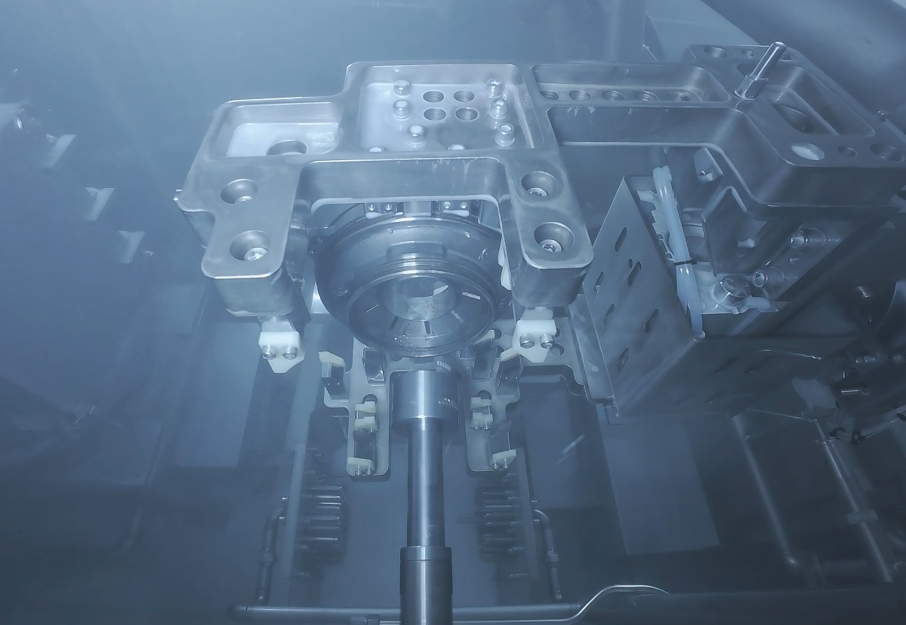
The heart of an effective parts cleaning system lies in the precise control of chemical parameters and bath dynamics. Whether using alkaline, acid, or neutral aqueous solutions, maintaining the optimal concentration, operating temperature, and chemical balance is vital. The chemical solution must penetrate the boundary layer of the contaminant, breaking its bond with the substrate through continuous emulsification or saponification. Our engineering field tests demonstrate that introducing mechanical agitation, such as fluid rotation or continuous spray-under-immersion techniques, accelerates the chemical reaction rate by three hundred percent. Furthermore, quality controllers must monitor the solution's pH levels, electrical conductivity, and contamination index daily. This strict monitoring prevents chemical saturation points where dissolved soils re-deposit onto the newly cleaned surfaces, ensuring absolute consistency across large production batches.
Rinsing Protocols and Contamination Control
Rinsing represents the most critical yet frequently overlooked phase of the industrial parts cleaning sequence. Residual cleaning chemicals left on the component surface can cause severe atmospheric corrosion, chemical staining, and long-term material degradation. To achieve international cleanliness benchmarks, factories should implement a multi-stage counter-current rinsing system using deionized water. This technical setup ensures that as components move forward, they encounter increasingly pure water, completely eliminating trace chemical surfactant residues. According to leading engineering guidelines for manufacturing cleanliness, monitoring the total dissolved solids within the final rinse tank is non-negotiable for zero-defect production. Maintaining this strict chemical control gives distribution partners total peace of mind, knowing that components are completely passivated and structurally pristine.
Advanced Drying Technologies and Atmospheric Control
An industrial part is not truly clean until it is completely dry and safe from the risks of oxidation. Leaving moisture on raw metal surfaces leads to instantaneous flash rusting, destroying surface integrity within minutes. Modern manufacturing lines implement forced-hot-air dryers, vacuum drying chambers, or centrifugal drying systems to eliminate moisture from complex internal recesses and fine screw threads. Vacuum drying is particularly effective for high-precision components because it lowers the boiling point of water, forcing rapid evaporation at lower temperatures without exposing sensitive alloys to thermal distortion. Additionally, the drying zone must operate within a filtered, positive-pressure environment to prevent ambient workshop dust from settling on the hot, exposed surfaces. This clean-room integration guarantees that parts remain untarnished as they move directly into final inspection and packaging.
Operational Standards and Global Competitiveness
Establishing a truly effective, world-class parts cleaning protocol requires a substantial organizational commitment to process control, environmental compliance, and continuous technical training. As global supply chains face increasing competitive pressures, manufacturers must invest in advanced cleaning infrastructure that minimizes energy usage while delivering unmatched quality benchmarks. This level of process specialization allows leading production facilities to consistently exceed the expectations of demanding global procurement operations. Enterprises aiming to elevate their components' structural quality can leverage the world-class manufacturing networks and precision engineering platforms of ISEE-SHIMADA. By embedding these highly optimized, multi-tier cleaning methodologies into daily production schedules, global supply networks secure a powerful competitive edge, ensuring unmatched product longevity and exceptional field reliability across all target markets.