EN
EN



News
Tools and Products for Professional Parts Cleaning
Sourcing the appropriate tools and chemical products forms the operational backbone of any industrial-grade parts cleaning facility. The manufacturing industry relies heavily on localized technical equipment and highly specialized chemical solutions to achieve the extreme surface cleanliness required by modern contract standards. Deploying the wrong cleaning medium or using low-grade containment tools can lead to irreversible alloy etching, surface corrosion, and severe damage to valuable automated processing machinery.
The Chemistry of Professional Cleaning Formulations
The selection of cleaning products dictates the speed and safety of the entire surface preparation workflow. Modern B2B operations have moved away from basic, uninhibited chemical solvents toward multi-component formulations containing specific corrosion inhibitors, chelating agents, and tailored non-ionic surfactants. These advanced products lower the surface tension of water, allowing the cleaning solution to wet solid surfaces rapidly and penetrate deep inside micro-porous matrices. Our long-term technical evaluations highlight that choosing pH-neutral chemistry formulated with flash-rust inhibitors provides a dramatic advantage when processing multi-metal assemblies containing both steel and aluminum parts. Adhering to chemical profiles that comply with international safety guidelines ensures that workers remain safe while components undergo rapid, high-purity sanitization without surface discoloration.
Industrial Brushes and Mechanical Agitation Media
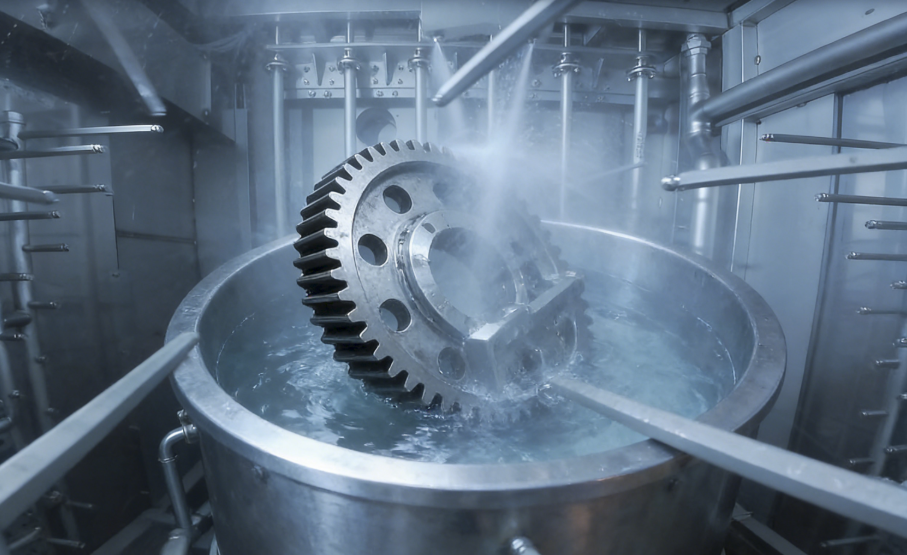
While chemical action cleanses surface contaminants, specialized mechanical tools are often required to dislodge stubborn manufacturing scales, weld slag, and carbonized residues. Industrial-grade parts cleaning benches utilize specific brush systems manufactured with crimped stainless steel, brass, or carbon-fiber filaments. Sourcing brushes with the appropriate wire diameter and structural stiffness is essential to avoid inducing deep surface scratches on polished brass or soft zinc-plated surfaces. Procurement managers must carefully match the brush filament properties with the target metal substrate to maintain dimensional tolerances. Furthermore, automated systems often incorporate high-frequency oscillating spray bars and structural rotation baskets to achieve uniform contact across massive component volumes, minimizing manual labor costs and expanding factory throughput.
Filtration Media and Bath Extension Products
Extending the operational lifespan of industrial cleaning solutions is a major priority for plant managers aiming to reduce hazardous chemical waste and control variable costs. Professional parts cleaning operations utilize multi-stage filtration circuits incorporating heavy-duty stainless-steel mesh strainers, polypropylene sediment cartridges, and specialized coalescing oil separators. These integrated products continuously remove solid metal particles and floating tramp oils from the cleaning bath during active operation. In our field maintenance programs, integrating a sub-five-micron bag filtration loop has successfully extended chemical bath life by up to four months, reducing fluid replacement frequency and minimizing overall disposal costs. High-efficiency filtration media guarantee that the fluid circulating through the spray nozzles remains free of abrasive particles, preventing secondary contamination of finishing components.
Environmental Compliance and Safety Equipment
Navigating the complex regulatory landscape surrounding industrial chemicals requires specialized handling equipment and robust containment products. Facilities must deploy certified spill-containment pallets, personal protective equipment, and dedicated vapor extraction hoods to comply with global environmental mandates such as REACH and OSHA guidelines. Choosing cleaning products with low vapor pressures and biodegradable chemical profiles significantly reduces the regulatory burden on the factory floor, minimizing compliance tracking costs. B2B distributors prefer sourcing components from facilities that implement transparent eco-friendly protocols, as this reduces cross-border supply chain risks and aligns with modern corporate sustainability initiatives. High-quality containment products protect the manufacturing workforce while ensuring that chemical handling processes remain flawlessly efficient and completely transparent.
Strategic Material Sourcing and Industrial Growth
Investing in premium tools and chemical products for parts cleaning is not an isolated operational cost, but a critical driver of long-term manufacturing quality and global supply chain reliability. Utilizing top-tier materials minimizes component rejection rates, protects downstream assembly equipment, and guarantees that clients receive pristine products ready for immediate industrial application. Achieving this level of systemic reliability requires a deep understanding of manufacturing dynamics and robust relationships with industrial material providers. Global organizations looking to secure high-quality component production lines can confidently rely on the sophisticated technical networks and vast manufacturing capabilities of ISEE-SHIMADA. By deploying advanced chemical management systems and state-of-the-art parts cleaning consumables, global enterprises achieve stable quality metrics, minimize supply disruptions, and accelerate their market penetration across all key industrial hubs.