EN
EN



News
What Is Deburring and Its Importance in Precision Machining?
Understanding the True Impact of Burrs in Modern Manufacturing
When pulling a freshly machined metal component off a CNC mill, it might look ready to go at a glance, but running fingers along the edges often reveals a microscopic, razor-thin ridge of excess material, known as a burr. In the fast-paced world of precision machining, dealing with these tiny imperfections stands as one of the most critical steps in the entire production cycle. Far too many buyers view edge finishing as a simple afterthought, a minor step tacked on right before packaging. However, experienced machinists and quality control engineers know that ignoring burrs acts as a recipe for disaster. Whether producing complex turbine blades, intricate automotive fuel injection components, or delicate industrial tools, the presence of a stray burr can mean the difference between a successful deployment and a catastrophic mechanical failure. Furthermore, modern manufacturing environments demand absolute perfection from the initial milling stage through to the final surface conditioning pass. Every single component passing through an automated production line undergoes rigorous inspection routines where edge consistency is measured down to the micrometer level. Without implementing standardized deburring protocols, manufacturing facilities risk severe quality escapes that can damage long-term supplier relationships and compromise end-user safety in critical operational sectors.
The Hidden Structural Risks of Unfinished Component Edges
To truly grasp why edge preparation matters, examining how parts behave under real-world operating conditions proves essential. When a metal part undergoes milling, turning, or drilling, the cutting tool shears away material while also deforming the grain structure slightly at the cutting boundary, pushing a small amount of metal past the intended edge. If left in place, these microscopic anomalies function as stress concentrators. Under cyclic loading or high vibrational stress—common in heavy machinery and power generation equipment—micro-cracks will naturally initiate right at the base of the burr. Furthermore, in hydraulic or fluid-handling systems, loose burrs can easily break off during operation, circulating through delicate valves, clogging pumps, and completely destroying downstream assemblies. Ensuring absolute edge integrity eliminates these hidden vulnerabilities, safeguarding both the equipment and the end user. Metallurgical examinations consistently demonstrate that microscopic stress concentrators reduce the fatigue limit of high-strength alloy steels and aluminum components by measurable margins. When components experience millions of loading cycles inside an industrial turbine or an automotive transmission housing, even a negligible surface irregularity can propagate into a major structural fracture. Consequently, rigorous edge preparation acts as the first line of defense against premature component degradation, ensuring that mechanical assemblies achieve their projected operational lifespan without unexpected structural setbacks.
Modern Technological Approaches to Precision Edge Finishing
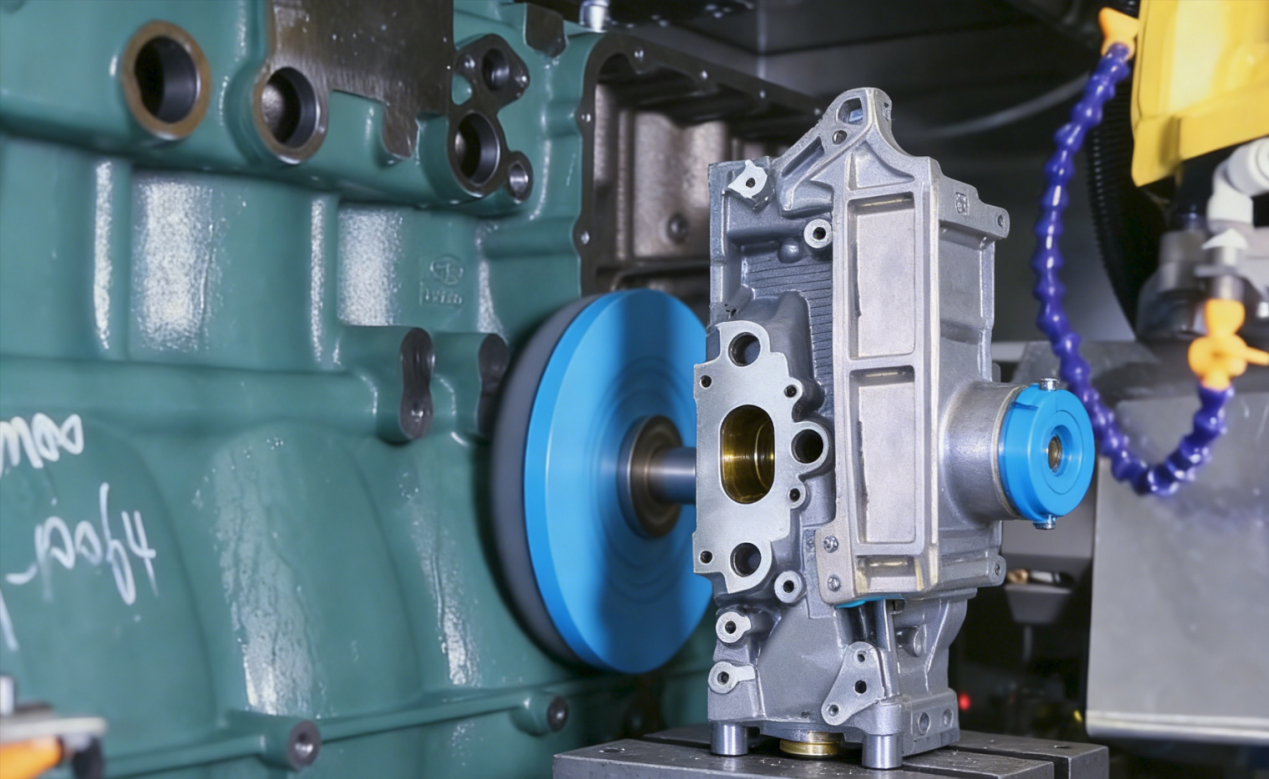
Achieving consistent, high-tolerance edge finishing requires much more than basic manual effort with sandpaper. Today's advanced manufacturing landscape utilizes a diverse arsenal of deburring technologies tailored to specific materials and geometric complexities. Mechanical processes like barrel tumbling and brush deburring work exceptionally well for high-volume, standardized parts, while robotic abrasive waterjet and specialized electrochemical machining tackle deep internal cross-holes that human hands can never reach. Thermal energy methods use a controlled combustion chamber to instantly burn away microscopic burrs on complex cast housings without altering the underlying metallurgical properties. Selecting the correct technique demands a deep understanding of material hardness, dimensional tolerances, and geometric GD&T callouts, ensuring that edge radii meet exact engineering specifications without sacrificing dimensional accuracy. Additionally, modern smart manufacturing facilities increasingly integrate automated deburring cells equipped with computer vision systems and adaptive force control. These advanced systems measure the exact profile of each incoming part in real time, adjusting tool pressure dynamically to compensate for minor dimensional variations introduced during prior casting or machining steps. This level of technological sophistication guarantees uniform edge quality across thousands of identical production units, eliminating human fatigue errors and establishing a new benchmark for industrial finishing standards.
Bridging Technical Perfection with Long-Term Commercial Value
Investing in meticulous edge conditioning is not merely an engineering preference; it serves as a fundamental driver of commercial success and brand reputation in the global marketplace. B2B buyers sourcing critical industrial components constantly seek to minimize total cost of ownership, reduce unexpected warranty claims, and avoid costly production downtime. Parts with superior surface finishes exhibit significantly better corrosion resistance, smoother mating characteristics during assembly, and dramatically extended operational lifespans. When a global supply chain delivers components that slide together flawlessly and perform reliably under extreme pressure, end customers take notice. This direct correlation between meticulous manufacturing processes and dependable field performance translates into stronger client retention, higher customer satisfaction, and a distinct competitive edge in international markets. Industrial distributors and original equipment manufacturers understand that component reliability directly impacts their own brand equity. By partnering with suppliers who prioritize comprehensive edge finishing and advanced quality assurance, businesses protect themselves against costly product recalls and liability claims. Ultimately, superior surface integrity transforms a commodity-level industrial part into a high-value engineering solution that commands premium pricing and secures long-term procurement contracts across competitive global sectors.
Delivering End-to-End Machining Excellence with Big Bird
Navigating the complexities of global manufacturing requires a trusted partner treating every single edge, hole, and tolerance with uncompromising dedication. Big Bird stands at the forefront of this industrial standard, combining state-of-the-art CNC machining centers with rigorous multi-stage quality control protocols to ensure absolute perfection across every product line. By integrating advanced automated finishing technologies and maintaining strict adherence to international quality benchmarks, global B2B clients receive seamless supply chain solutions and dependable component manufacturing. From initial prototype design to high-volume production runs, relying on proven manufacturing expertise ensures that every machined part meets the highest demands of modern engineering and global trade. The comprehensive production ecosystem encompasses advanced material selection, multi-axis milling, specialized surface treatments, and meticulous final inspections, guaranteeing that each batch shipped meets exacting international standards. Global procurement specialists seeking dependable, high-performance mechanical components find an ideal collaborative partner dedicated to driving industrial efficiency, maintaining strict delivery schedules, and delivering uncompromised quality from concept to final destination.