EN
EN



News
Why Is Visual Inspection a Must in Automotive Metal Component Production?
Maintaining Product Quality and Uniformity
Visual inspection serves as the last line of defense against automotive metal component manufacturing defects during the production process. Visual defects such as surface scratches and inattention to detail, such as failure to notice a missing component, assembly errors, and size defects, trigger massive recalls and jeopardize the safety of the vehicle. Defective components manufactured in bulk create a perpetual cycle of lost production and increased costs. Visual inspection, however, stops these cycle and cost increases at the source. Modern visual inspection technologies ensure that surface defects, as well as imperfections like scratches and missing components, are routinely stopped from passing to the next production steps. Defects decrease because visually inspected components reach subsequent production steps one unit at a time. Visual uniformity is increased, especially in large production volumes. Fewer defects in the overall production process increase the uniformity of production volumes through the cycle, decreasing the production costs. This uniformity in production, through the elimination of defects and the visual inspection of components, directly increases the manufacturers and automakers reliability and reputation.
Managing Risks and Saving Money
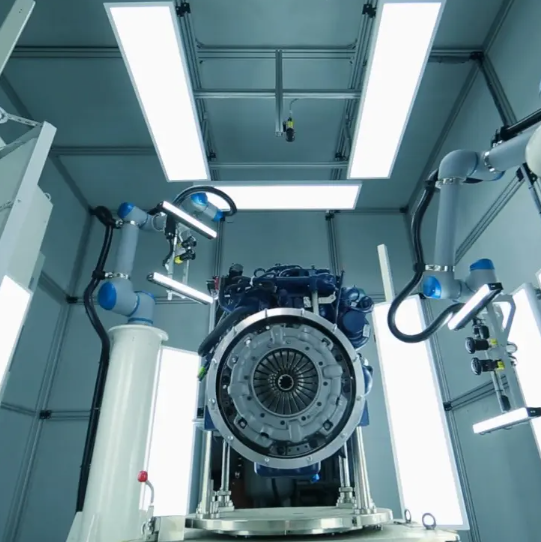
Defective parts on a car are a huge problem due to the potential of car accidents and huge monetary loss due to lawsuits. Automated visual inspections are and can be a huge asset to automotive plants because of the ability to pinpoint production issues. This saves the costs of dealing with mistakes at the more difficult assembly stage or after delivery to the consumer. Automated visual inspections are also much safer due to the elimination of human inspections lessening the labor and more importantly the human error costs. Overall these inspections can save businesses a lot of money by lowering the value of production scrapped, goods needed to be repaired, and goods that need to be recalled. Overall these inspections are a great way to improve a businesses value.
Measuring Compliance and Industry Standards
Automotive plants have to follow strict rules and guidelines. Visual inspection and automated inspections can help these plants fulfill these requirements on a day to day basis. Automated inspections can help plants comply with international standards as well as fulfill specifications and requirements that individual car manufacturers. This can help businesses avoid lawsuits and can ease the compliance headaches these companies have be dealing with. Reliable automated visual inspections have become a standard requirement for automotive suppliers who want to expand their business operations on a global scale.
Enhancing Operational Efficiency and Productivity
Having an employee perform inspections is slow and tiring resulting in slowed work and errors. Automated systems work quickly and smoothly in production processes giving constant feedback. Manufacturers are then able to quickly fix issues, smooth production and improve total output. Automated systems can inspect hundreds to thousands of products in an hour, allowing mass production while keeping the quality high. Additionally, visual inspection systems can be used to analyze the data and identify trends in defective products, allowing further refinement of production processes.
Delivering Long-Term Value and Competitive Advantage
Investing in visual inspection technologies doesn’t just have short-term benefits, there are also long-term gains and can provide a competitive advantage. Customers place trust in and partnerships are formed with manufacturers consistently able to produce high-quality parts. Visual inspection also helps manage innovation with the ability to take on new highly complex parts that require precise quality control. In the modern market the ability to produce reliable and high-quality parts is a huge competitive advantage. Visual inspection systems can also be updated and tailored to the individual manufacturer allowing continual competitive advantage as systems can be adapted as inspection requirements change.Cost Effectiveness vs. Performance
There is no other industry where such a balance can leach such profits as in the industry of visual inspection. Other businesses that focus primarily horizontal visual inspection technology can make a fair return while junior veterans can make a profit while overperforming with the investment, leading to expansion. In contrast to competitors providing custom optical inspection lines, the focus is solely on the industry of visual inspection technology. Over time, the investment has tangible returns in the form of reduced waste, increasing output, and measurable improvement in customer satisfaction. For every visual inspection these businesses focus on, they understand it is an opportunity to leverage in order to maximize profit while spending relatively less.