EN
EN



News
What Is Deburring and Its Importance in Machining?
Understanding the Fundamentals of Deburring in Modern Machining
In the world of precision manufacturing, every single micron counts toward the final performance of the product. When a metal part is cut, milled, or drilled using CNC machinery, the machining process inevitably leaves behind tiny, raised edges, sharp slivers, or jagged pieces of material known as "burrs." Deburring is the critical, non-negotiable finishing process used to identify and remove these unwanted artifacts. While it may seem like a simple final step to an outsider, ignoring proper deburring protocols is a recipe for serious operational failure. From a technical standpoint, burrs are not just surface imperfections; they are severe stress concentrators that can compromise the mechanical integrity and fatigue resistance of vital components. Drawing from extensive, decades-long experience in the high-precision machining sector, it is crystal clear that high-quality production relies heavily on the systematic elimination of these microscopic defects. Whether dealing with complex aerospace engine components, intricate automotive transmission parts, or delicate medical device housings, the absolute precision of the final product is directly tied to the effectiveness and consistency of the chosen deburring strategy.
The Vital Role of Deburring in Quality Assurance and Operational Safety
Quality assurance is the beating heart of any world-class manufacturing facility, and professional deburring is one of its most essential, foundational components. Unremoved burrs are a leading cause of assembly interference, where complex parts fail to fit together correctly due to microscopic physical obstructions that are often invisible to the naked eye. Beyond simple fitment issues, loose metallic burrs present significant and immediate safety risks; they can break off during operation, potentially causing catastrophic damage to sensitive neighboring machinery or posing severe hazards to end-users in critical applications. Industry authorities, including various international ISO quality standard bodies and aerospace safety councils, consistently emphasize that surface finishing is not optional—it is a mandatory step for regulatory compliance and operational security. Expertise in this specialized field requires a deep, scientific understanding of the specific metallurgy and geometric tolerances of the parts to determine the appropriate force, vibration, and abrasive tools needed for safe cleaning. Consistent, automated deburring ensures that every individual part leaving the factory floor meets the most stringent global tolerance requirements, thereby drastically reducing costly product recalls and maintaining the unwavering trust of clients in the brand.
Impact of Surface Finish on Functional Performance and Reliability
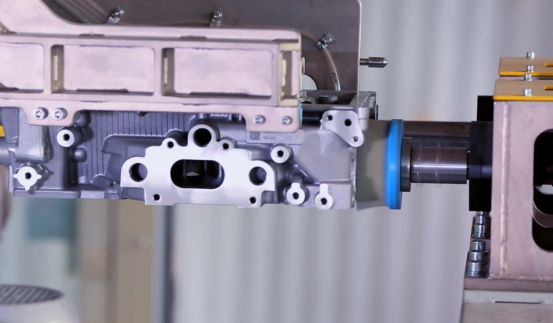
The long-term performance and reliability of a machined component are heavily influenced by its surface finish quality. Burrs disrupt laminar flow in fluid-based systems, cause premature, abrasive wear in bearings, and severely interfere with electrical connectivity in sensitive precision electronics. In high-pressure hydraulic systems, for instance, a small, overlooked residual burr can trigger violent turbulence or internal cavitation, leading to rapid system degradation and eventual failure. By systematically removing these imperfections, manufacturers achieve smoother surfaces that optimize operational efficiency and increase the lifespan of the equipment. This level of granular attention to detail is precisely what separates mediocre production from world-class, high-end manufacturing. Experienced engineers and material scientists understand that effective deburring processes significantly improve the fatigue strength of a component, as the removal of stress-inducing sharp edges allows the material to handle high-frequency mechanical loads much more effectively over its entire intended service life. This effectively creates a more robust, stable, and reliable final product that performs predictably even under the most extreme industrial conditions.
Evolution of Deburring: From Manual Tasks to Advanced Automation
Historically, deburring was a labor-intensive, slow, and often inconsistent manual task, relying heavily on the subjective judgment of skilled workers using hand files, scrapers, and basic abrasive pads. While manual deburring still has its niche applications, it is inherently prone to human error, significant batch-to-batch inconsistency, and excessively high operational costs. Modern, cutting-edge manufacturing has shifted significantly toward sophisticated, automated deburring solutions that minimize the need for manual intervention. Advanced technologies—such as specialized robotic brushes, precision high-pressure water jet deburring systems, and CNC-integrated electrochemical deburring processes—have completely transformed how major companies approach the critical finishing phase. These automated, computer-controlled systems provide repeatable, high-precision results that manual labor simply cannot match in terms of cycle time or quality consistency. Big Bird has observed that integrating these advanced automated technologies directly into the production line significantly reduces overall cycle times while simultaneously increasing workplace safety by removing the constant need for manual handling of potentially sharp or hazardous components. This transition to full-scale automation is the true hallmark of a forward-thinking, competitive facility that values extreme precision, high production speeds, and employee safety in equal measure.
Business Value and Competitive Advantage in Global Markets
Investing in sophisticated, reliable deburring processes is not just a technical requirement to pass inspections; it is a vital, strategic business decision that pays dividends in the long run. High-quality surface finishing acts as a silent but powerful messenger of overall product quality, effectively differentiating a company's output in an incredibly crowded global marketplace. Manufacturers who consistently overlook or undervalue deburring often face massive hidden costs related to time-consuming rework, unexpected assembly line bottlenecks, and severe reputation damage due to premature product failure in the field. Conversely, firms that prioritize rigorous, data-driven deburring protocols benefit from higher throughput, drastically lower scrap rates, and significantly improved customer satisfaction scores. By optimizing these critical finishing stages, businesses can achieve the "precision edge" that demanding clients now expect as standard. This focused approach directly contributes to a stronger bottom line and establishes an unshakable reputation for technical excellence that is absolutely essential for competing in industries where failure is simply not an option.
The Big Bird Commitment to Precision Excellence
Achieving true perfection in high-end manufacturing requires a seamless combination of top-tier hardware, deep, years-honed industry expertise, and a relentless, unwavering commitment to quality standards. Big Bird stands firmly at the forefront of this pursuit, offering highly advanced solutions that integrate precision cleaning and automated deburring as essential, non-negotiable parts of the entire manufacturing workflow. By providing highly reliable equipment and comprehensive, end-to-end supply chain support, Big Bird ensures that industrial partners around the world can consistently meet the most demanding surface finish standards with ease and confidence. The integration of intelligent, automated cleaning and deburring technology reflects a profound dedication to constantly pushing the technical boundaries of what is possible in modern precision machining. Ultimately, the successful partnership with a knowledgeable, experienced supplier who truly understands the deep complexities of surface engineering is the single most important key to maintaining a massive competitive advantage in today's rapidly evolving, high-stakes manufacturing landscape.