EN
EN



News
How to Optimize Subframe Structures in Modern Vehicles?
The Evolution of Modern Vehicle Subframe Structures
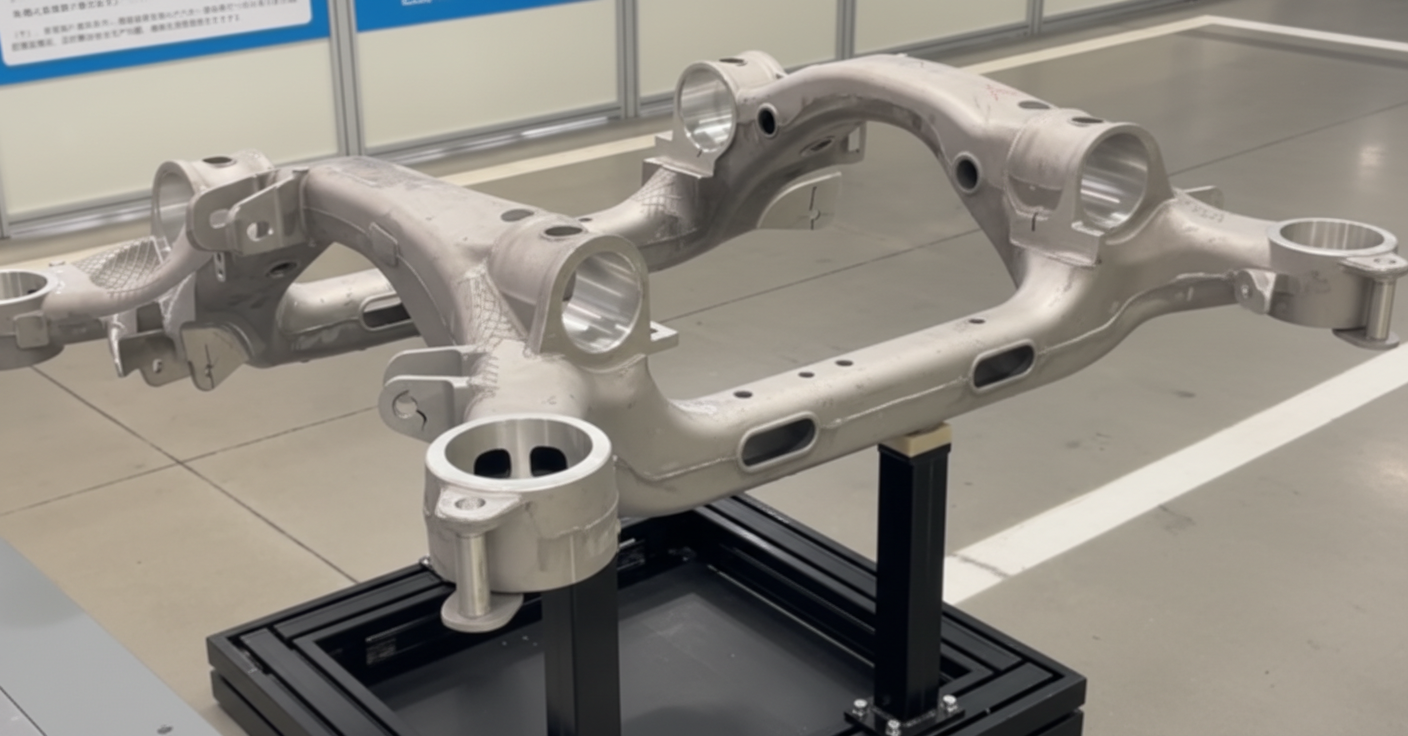
Modern vehicle engineering is defined by a relentless drive toward efficiency, structural integrity, and occupant safety. The subframe, acting as the critical backbone that connects the engine, drivetrain, and suspension to the vehicle chassis, has undergone significant transformation. Today’s automotive engineers are tasked with designing subframes that are lighter, more rigid, and capable of absorbing impact energy with unprecedented precision. The shift toward Electric Vehicles (EVs) has further intensified these requirements, as subframes now frequently house heavy battery assemblies, necessitating complex geometry and precise mounting points that demand rigorous quality control protocols during manufacturing. As global automotive standards continue to evolve, the ability to produce subframes that combine high strength with lightweight materials has become a hallmark of competitive manufacturing excellence. Engineers are now exploring advanced materials and manufacturing techniques to meet these needs while ensuring that the structural integrity remains uncompromised under the most demanding driving conditions. Furthermore, the role of the subframe in NVH (Noise, Vibration, and Harshness) reduction has become increasingly vital, pushing manufacturers to innovate not just in geometry, but also in material science and vibration damping strategies that enhance the overall driver experience.
Navigating the Manufacturing Challenges of High-Precision Parts
Manufacturing these critical structural components involves advanced fabrication techniques such as high-strength steel stamping, aluminum casting, or hybrid welding. However, these processes introduce potential deviations—such as minor thermal distortions or weld imperfections—that can compromise overall vehicle dynamics. Achieving the necessary dimensional tolerances requires more than just high-end machinery; it requires an intelligent approach to production monitoring. Industrial veterans recognize that even a few millimeters of misalignment in a subframe can lead to significant assembly issues later in the production line, ultimately affecting vehicle performance and long-term reliability. Addressing these risks proactively is essential for any tier-one supplier or OEM looking to maintain market leadership. The complexity increases when considering the various international safety standards that must be met, requiring manufacturers to implement comprehensive quality management systems that monitor every stage of production from raw material handling to final assembly. Beyond the mechanical assembly, managing the logistical flow of these large, heavy components through the plant adds a layer of operational challenge that requires automated, efficient, and precise handling systems.
Harnessing Machine Vision for Unmatched Quality Assurance
The transition from manual quality inspection to sophisticated vision inspection systems has fundamentally altered how manufacturers maintain excellence in subframe production. By deploying high-resolution machine vision, factories can now automatically detect structural deviations, measure critical geometric dimensions, and verify the integrity of every single weld in real-time. This technology does not just replace human inspection; it elevates the process by offering objective, data-driven insights. For instance, vision systems can identify subtle bead irregularities in welds and check critical form and position tolerances as well as weld seams with absolute precision. Shimada Big Bird has been at the forefront of integrating such intelligent visual inspection equipment into production lines, helping manufacturers reduce scrap rates and ensure that every part leaving the floor aligns with blueprint specifications. By utilizing advanced sensors, high-speed cameras, and AI-driven algorithms, these systems provide a level of accuracy and repeatability that is critical for mass production environments. This ensures that even the most subtle deviations are captured, logged, and corrected, maintaining a near-perfect yield rate that is essential in competitive global markets.
Optimizing Production Efficiency and Sustainable Manufacturing
Beyond simple error detection, the integration of advanced inspection and cleaning systems enables a seamless, highly optimized manufacturing environment. When subframes are produced with high consistency, assembly times are drastically reduced, as robots can perform subsequent welding or fastener installation without needing continuous adjustments to compensate for part variations. Furthermore, by incorporating precision cleaning solutions—another area of expertise for Shimada Big Bird—manufacturers ensure that all subframe components are free from contaminants before crucial assembly steps. This focus on purity, combined with real-time inspection, directly supports the sustainability goals of modern automotive brands by reducing waste, improving resource utilization, and extending the service life of the finished product. By streamlining the production flow and minimizing the need for rework, manufacturers can achieve significantly higher throughput and lower total operating costs, positioning themselves for greater profitability and long-term growth in a crowded global market. Furthermore, reducing the energy consumption associated with rework cycles and optimizing the usage of cleaning agents contributes to a smaller environmental footprint, aligning with the increasingly stringent environmental regulations governing the manufacturing sector.
Unlocking Long-term Commercial and Brand Value
Investing in automated subframe inspection and precision processing technology is no longer just a technical upgrade; it is a vital business strategy. Customers today demand absolute transparency and consistency, and manufacturers who can prove their quality control capabilities gain a competitive edge in global supply chains. By partnering with experts who understand both the intricacies of subframe engineering and the importance of factory-floor intelligence, businesses can shift their focus from reactive problem-solving to proactive value creation. The reputation of a brand is built on the performance and safety of its vehicles, and every component—especially the subframe—plays a decisive role in upholding that standard. In an age where digital manufacturing records and traceability are becoming mandatory requirements for OEMs, having an integrated inspection solution provides a significant advantage, allowing for full visibility into production data and process reliability. This data, when analyzed over time, enables manufacturers to identify trends, optimize their processes, and continually improve their output quality, reinforcing their position as preferred suppliers for top-tier automotive brands.
Collaborating for a Future of Intelligent Manufacturing
Achieving global standards in automotive manufacturing requires a synergy between advanced equipment, expert engineering, and reliable supply chain support. Companies looking to excel in the competitive automotive and EV sectors find success by leveraging integrated solutions that encompass the entire production lifecycle, from precision cleaning to automated visual inspection. Shimada Big Bird remains committed to empowering manufacturers worldwide by providing the sophisticated tools and technical guidance necessary to optimize these critical structural processes. As the automotive industry moves toward an era of intelligent, automated production, maintaining rigorous quality standards while enhancing efficiency will continue to be the primary engine of long-term success. Through consistent innovation, dedicated R&D, and a focus on customer-centric engineering, we continue to support our partners in achieving their most ambitious production goals, ensuring that every vehicle on the road is built on a foundation of uncompromised quality and reliability. By embracing the next generation of smart manufacturing technologies, industry leaders can ensure they remain at the forefront of innovation, ready to meet the challenges of tomorrow’s mobility landscape with confidence and superior technical capability.