EN
EN



News
How to Use Water-Based Products for Industrial Cleaning?
Mastering the Use of Water-Based Products for Industrial Cleaning
Industrial cleaning has undergone a massive, positive shift in recent years, moving away from harsh, volatile solvent-based cleaners toward safer, more effective water-based solutions. In the modern precision manufacturing landscape, maintaining absolute surface purity is not merely an aesthetic choice—it is a mandatory functional requirement for structural reliability. Based on extensive experience across diverse industrial sectors, it is clear that water-based products are now the primary engine driving this sustainability revolution. These cleaning solutions, when utilized within the right technological frameworks, offer a potent combination of performance and safety that legacy chemicals simply cannot match. Understanding how to correctly implement these products is the fundamental key to unlocking superior production quality, extending the service life of mission-critical components, and ensuring that every stage of the manufacturing process aligns with the highest international environmental standards.
Unlocking the Science Behind Water-Based Cleaning Mechanisms
Water-based cleaning solutions function through a carefully engineered blend of surfactants, chelating agents, and pH modifiers, rather than relying on aggressive, flammable solvent vapors. These formulations are specifically designed to break the surface tension of water, allowing the solution to penetrate deep into microscopic crevices, complex oil channels, and intricate part geometries. The technical expertise required to select the right product lies in understanding the specific contaminants—whether they are cutting oils, stamping lubricants, or industrial debris—and matching them with a compatible aqueous solution. Unlike volatile chemicals that can leave behind greasy residues or trigger hazardous environmental concerns, high-grade water-based products are formulated to be highly efficient in lifting contaminants away from the metal surface, which are then easily removed through controlled rinsing. This scientific approach ensures that the cleaned surface is left in a state of absolute, chemically neutral purity.
Optimizing Operational Parameters for Maximum Cleaning Efficiency
Achieving optimal results with water-based products requires more than just picking a high-quality solution; it necessitates a rigorous approach to process optimization. Industrial operators must focus on the critical interplay between solution concentration, water temperature, and mechanical agitation. Expertise in this area dictates that temperature control is non-negotiable, as heated aqueous solutions are significantly more effective at emulsifying heavy lubricants. Modern production environments must implement systematic, data-driven monitoring of these parameters. By maintaining strict control over the chemistry and physics of the cleaning bath, facilities can ensure that every single batch of parts receives a consistent, high-performance cleaning result that meets the most stringent industrial quality benchmarks.
The Vital Role of Integrated Automation in Aqueous Processes
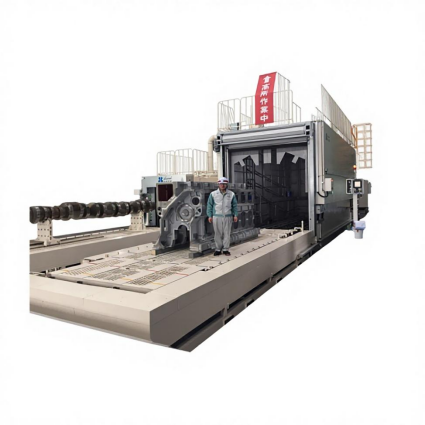
The transition to water-based products is most successful when these solutions are integrated into purpose-built, automated cleaning systems. Manual cleaning—regardless of the quality of the cleaning agent used—is fundamentally inconsistent and inherently prone to human error. Big Bird has observed that the most competitive, world-class facilities are those that move entirely away from manual spraying or dipping. Instead, they utilize sophisticated, multi-axis robotic systems that move parts through a series of precision-controlled wash, rinse, and drying stages. These automated, closed-loop systems are specifically engineered to harness the maximum cleaning potential of water-based solutions by applying them with precision-engineered pressure and flow patterns. This integration eliminates the risk of human error, protects personnel from repetitive strain, and ensures that even the most complex internal fluid passages are thoroughly and reliably cleaned during every single production cycle.
Maximizing Long-Term Commercial and Environmental Value
Switching to water-based products is a high-impact, strategic business decision that offers substantial, measurable benefits across the entire supply chain. From a purely economic standpoint, aqueous solutions are generally more cost-effective to store, handle, and dispose of, significantly reducing the overhead associated with hazardous waste management and stringent environmental insurance premiums. Beyond cost savings, the move to water-based technology demonstrates a profound commitment to sustainable manufacturing—a core value that is increasingly demanded by top-tier global clients in the aerospace, automotive, and medical device sectors. By adopting these greener, more efficient cleaning protocols, manufacturers not only enhance their operational reputation but also secure a distinct, long-term competitive advantage. This commitment to environmentally conscious, high-performance production is a clear indicator of a facility that is built for the future of global, high-stakes manufacturing.
Big Bird as Your Partner in Precision Finishing
Achieving the pinnacle of surface finish quality requires a seamless, expertly designed combination of advanced chemistry, precision-engineered equipment, and deep, years-honed industry expertise. Big Bird stands at the absolute forefront of this technological shift, providing the highly reliable equipment and comprehensive, end-to-end support that industrial partners need to succeed in the demanding, modern manufacturing era. By integrating advanced aqueous cleaning technology directly into the core production workflow, Big Bird ensures that industrial enterprises can consistently achieve perfect surface purity, maximize operational efficiency, and maintain the highest standards of safety and environmental compliance. Partnering with a specialist who truly understands the complex, subtle nuances of surface engineering is the single most important, strategic step toward maintaining an unshakable, high-level competitive advantage in today's rapidly evolving global marketplace.