EN
EN



News
What Makes a Cleaning Machine Efficient in Heavy Manufacturing?
The Efficiency Challenge on the Heavy Manufacturing Floor
Stepping onto a heavy manufacturing shop floor reveals a relentless symphony of CNC mills, hydraulic presses, and robotic welding cells shaping massive steel and aluminum structures. Yet, behind every high-output machining line lies a hidden bottleneck that frequently escapes executive attention: industrial parts cleaning. When heavy-duty components emerge from machining centers, they carry heavy layers of stubborn cutting fluids, metallic chips, carbon residues, and thick drawing oils. Trying to remove these contaminants with outdated washing equipment or haphazard manual wiping creates severe production delays and inconsistent surface quality. Experienced plant managers know that operational efficiency depends just as much on how cleanly a part leaves the production line as how fast it entered. Addressing this challenge requires moving beyond basic soak tanks and investing in sophisticated cleaning machinery engineered specifically to handle the brutal demands of heavy industrial production without missing a single beat. Modern manufacturing facilities face relentless pressure to maximize throughput, reduce scrap rates, and satisfy strict environmental regulations regarding wastewater disposal. Consequently, upgrading the parts-washing stage from a mere afterthought to an engineered science has become an absolute necessity for competitive industrial operations worldwide.
Core Mechanics of Industrial Cleaning Efficiency
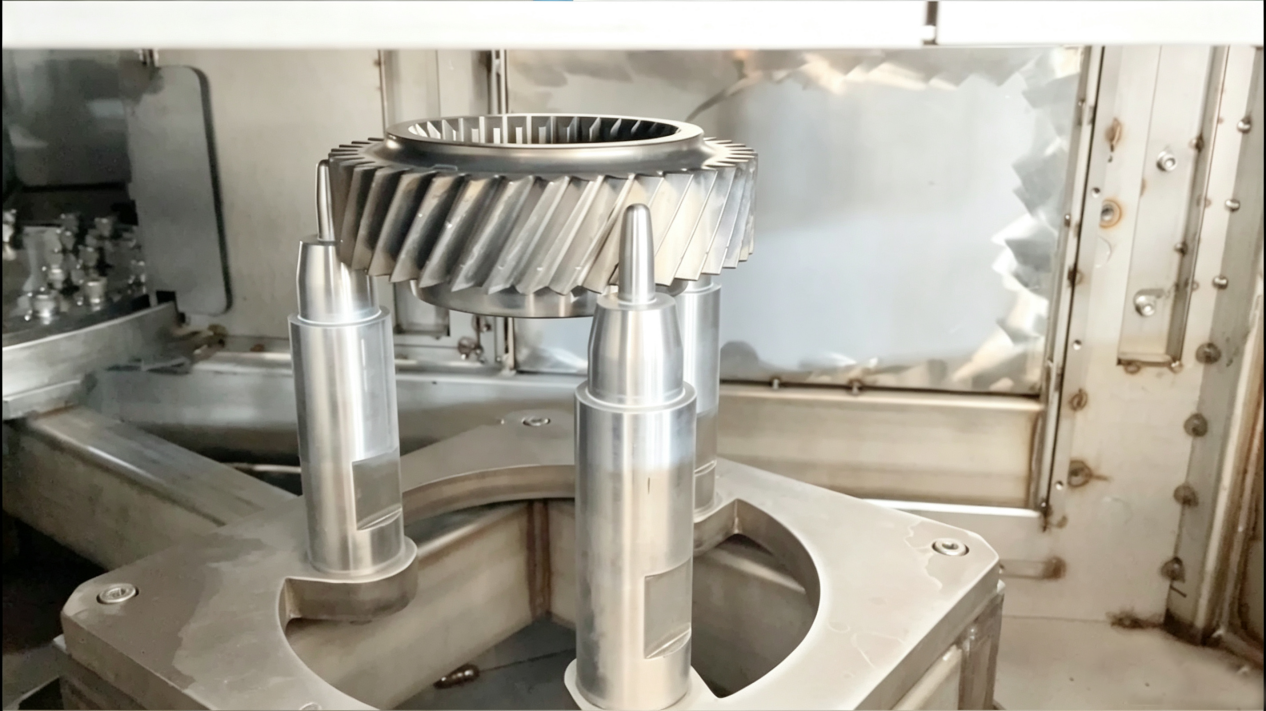
Achieving genuine cleaning efficiency on massive structural components requires a sophisticated blend of fluid dynamics, thermal control, and mechanical energy delivery. Advanced industrial cleaning systems do not merely splash water over dirty metal; they utilize precise combinations of high-pressure multi-directional spray manifolds, ultrasonic cavitation, and intelligent filtration loops. When high-frequency ultrasonic waves propagate through specialized aqueous cleaning solutions, millions of microscopic vacuum bubbles form and violently collapse near the metal surface. This process, known as cavitation, generates localized micro-jets capable of stripping away stubborn grease and microscopic metallic fines trapped deep inside blind tapped holes and complex internal channels. Furthermore, efficient cleaning machines incorporate automated oil skimmers and multi-stage cascade rinsing tanks that continuously purify the wash liquid, preventing dissolved contaminants from redepositing onto newly cleaned components during the final rinse cycle. Thermal regulation also plays a pivotal role, maintaining optimal chemical activation temperatures so that oils and organic residues emulsify rapidly without requiring excessive power inputs or hazardous chemical additives.
Why Surface Cleanliness Dictates Long-Term Product Reliability
In the realm of heavy manufacturing and precision engineering, surface cleanliness serves as the absolute foundation of structural reliability and component longevity. Metallurgical studies and industrial quality benchmarks consistently demonstrate that microscopic residues left behind on machined surfaces will eventually react with operational lubricants, accelerating galvanic corrosion and inducing premature fatigue failures under cyclic loading. When components destined for high-stress industrial machinery, automotive assemblies, or heavy power systems enter the field with residual particulate matter, those trapped particles act as localized stress concentrators and abrasive agents. Ensuring absolute surface integrity through rigorous, high-efficiency washing protocols eliminates these hidden risks before parts ever reach final assembly. Plant engineers who prioritize uncompromising cleanliness standards protect their brand reputation, drastically minimize field warranty claims, and ensure that every delivered metal component performs reliably under extreme mechanical pressure. Without dependable cleaning systems, even the most precise CNC machining operations can be undermined by lingering micro-contaminants that compromise the structural integrity of the final assembly.
Translating Cleanliness into Lower Total Cost of Ownership
Investing in state-of-the-art cleaning technology is never merely an operational expense; it acts as a powerful financial catalyst that drives down the total cost of ownership across the entire manufacturing lifecycle. Traditional washing methods often suffer from high chemical consumption, excessive water waste, and frequent maintenance downtime due to clogged nozzles and filter saturation. In contrast, modern efficient cleaning systems optimize fluid consumption through closed-loop recycling technology, smart thermal insulation, and programmable cycle times tailored to specific material grades. For B2B procurement specialists and factory directors, this translates directly into lower utility bills, reduced hazardous waste disposal fees, and uninterrupted production flow. When cleaning operations run seamlessly without unexpected breakdowns or manual intervention, overall plant productivity surges, labor costs decline, and profit margins expand in an increasingly competitive global marketplace. Furthermore, extending bath life through advanced filtration and oil separation minimizes the frequency of total fluid dumps, directly reducing chemical replenishment expenditures and supporting corporate sustainability objectives.
Empowering Global Industrial Standards Through Advanced Manufacturing Solutions
Navigating the complexities of heavy industrial production requires a trusted manufacturing partner capable of delivering robust, reliable, and technologically advanced equipment from concept to final site installation. Big Bird stands at the forefront of this industrial standard, specializing in precision cleaning solutions, automated deburring systems, and intelligent machine vision inspection equipment tailored for demanding global sectors. By combining rigorous multi-stage quality control protocols with innovative surface engineering expertise, the company provides international B2B clients with seamless supply chain support and custom-engineered machinery designed to optimize factory workflows. From initial plant layout planning to high-volume manufacturing optimization, relying on proven industrial expertise ensures that every facility achieves uncompromising surface integrity, superior operational efficiency, and long-term competitive advantage in worldwide trade.