EN
EN



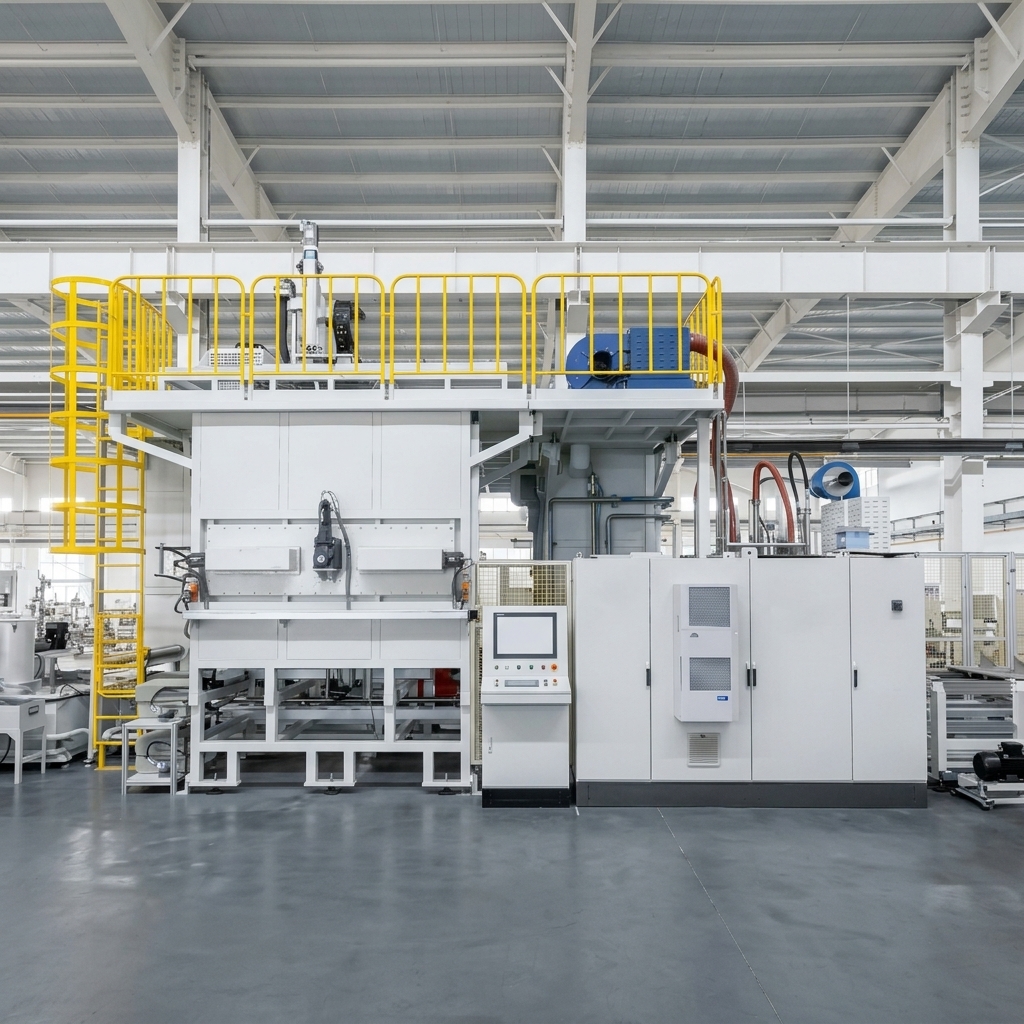
Automotive Crankshaft Multi-Station Final Cleaning System for Engine Manufacturing
Customized turnkey solution for a major automotive crankshaft manufacturer
Application: Crankshaft Final Cleaning for Automotive Engine Manufacturing
Workpiece: Automotive Crankshafts — Length ≤800 mm, Swing Diameter ≤Φ250 mm, Weight ≤60 kg
Cleaning Process: Ultrasonic Cleaning + Spray Cleaning (0.5 MPa) + High-Pressure Fixed-Point Cleaning (15–20 MPa) + Spray Rinsing + Hot Air Drying + Vacuum Drying
Cleaning Pressure: High-Pressure 15–20 MPa (Max 28 MPa) / Spray 0.5 MPa — customizable
Ultrasonic Cleaning: Integrated Ultrasonic Cleaning Station — customizable
Cleaning Temperature: 35–45°C (Electric Heating) — customizable
Cycle Time: ≤180 seconds per piece (including robot loading/unloading) — customizable per production line requirements
Cleanliness Requirement: Total Residual Contamination ≤10 mg; Oil Gallery Contamination ≤3 mg; Particle Size ≤0.6 mm; Particle Count Limits per Size Range — customizable per customer requirements
Drying Technology: Hot Air Drying + Vacuum Drying
Robot Configuration: 6-Axis Robot (IP67, 100 kg Payload) — customizable
Loading/Unloading: Automatic Loading (Gantry Robot) / Manual Unloading — customizable
Description
Automotive Crankshaft Multi-Station Final Cleaning System
The Big Bird Industrial Crankshaft Multi-Station Final Cleaning System is developed for final cleaning of automotive crankshafts after machining and oil-based polishing operations. The system removes cutting fluids, metal chips, oil contaminants, and particulate residues from oil galleries, threaded holes, and all external surfaces before assembly.
The equipment is provided as a turnkey solution including design, manufacturing, installation, and commissioning.
Workpiece Applications
The system accommodates automotive crankshaft components:
| Parameter | Specification |
|---|---|
| Crankshaft Length | ≤800 mm |
| Swing Diameter | ≤Φ250 mm |
| Weight | ≤60 kg |
| Material | Forged Steel or Cast Iron |
| Primary Product | 4-Cylinder Crankshaft for Automotive Engines |
| Compatible Products | Additional variants via tooling changeover (manual) |
All workpieces are automotive crankshafts for engine manufacturing applications. The system is designed with manual changeover capability for additional crankshaft variants through fixture replacement, program adjustment, and robot trajectory modification.
Automatic Mixed-Model Production
The system supports automatic mixed-model production with:
Automatic Loading
Gantry robot automatically places the workpiece onto V-block locating seats at the loading station
Slide drive mechanism transfers the workpiece to the robot pick-up position
Center hole blow-off before robot gripping
Workpiece identification system (switch-based) for existing variants
Error-proofing: axial detection, radial detection, and large/small end orientation detection
Safety guard with electronic interlock
Robot System
ABB IRB6700-200/2.6 6-axis robot
IP67 protection
100 kg maximum payload
Robot gripper features self-locking function (workpiece cannot fall on power/air loss)
Manual gripper change for different workpiece variants
Manual Unloading
Operator removes workpiece at the unloading station
Safety light curtain for operator protection
Workpiece locating mechanism for laser marking (laser marker provided by customer)
Multi-Stage Cleaning Process
The system combines multiple cleaning technologies in an 8-stage automated sequence:
Stage 1: Loading (1ST)
The gantry robot automatically places the workpiece onto V-block locating seats at the loading station. The slide drive mechanism transfers the workpiece to the robot pick-up position. The robot performs center hole blow-off before gripping, then transfers the workpiece into the cleaning chamber.
Manual changeover of locating blocks is required when switching workpiece variants. The station features workpiece identification (switch-based), error-proofing (axial detection, radial detection, orientation detection), and safety guard with electronic interlock.
Stage 2: Ultrasonic & Spray Cleaning (2ST) — 0.5 MPa
The robot transfers the workpiece to the ultrasonic cleaning station pallet. The pallet lowers, submerging the workpiece in the cleaning tank which has been pre-filled with cleaning fluid. Ultrasonic cleaning (25 kHz) removes contaminants from all surfaces and internal passages.
After ultrasonic cleaning, spray nozzles on both sides perform spray cleaning of the workpiece surface. After cleaning, the lifting mechanism raises the workpiece, and the robot transfers it to the next station.
Stage 3: High-Pressure Fixed-Point Cleaning (3ST) — 15–20 MPa (Max 28 MPa)
The robot transfers the workpiece to the high-pressure cleaning station pallet. The XYZ three-axis module positions nozzles for high-pressure cleaning of center holes at both ends.
After center hole cleaning, the servo motor drives clamping arms to clamp the workpiece via centers at both ends, with locating pins engaging the locating pin holes. The pallet lowers, and the clamping mechanism rotates the workpiece to the specified angle.
The XYZ three-axis module performs fixed-point and scanning high-pressure cleaning of workpiece surfaces and oil galleries. After cleaning, blow-off nozzles dry the workpiece. The robot then transfers the workpiece to the next station.
The spindle features automatic nozzle change with three nozzle types: straight nozzles, fan nozzles, and angled nozzles, with corresponding nozzle holders.
Stage 4: Spray Rinsing (4ST)
The robot transfers the workpiece to the rinsing station pallet. The servo motor drives clamping arms to clamp the workpiece via centers at both ends, with locating pins engaging the locating pin holes. The pallet lowers, and the clamping mechanism rotates the workpiece to the specified angle.
The XYZ three-axis module performs fixed-point and scanning rinsing of workpiece surfaces and oil galleries. After rinsing, blow-off nozzles dry the workpiece. The robot then transfers the workpiece to the next station.
The spindle features automatic nozzle change with three nozzle types: straight nozzles, fan nozzles, and angled nozzles.
Stage 5: Transfer Point (5ST)
The robot places the cleaned workpiece onto the transfer pallet. The chain conveyor system transports the workpiece to the next station.
Stage 6: Hot Air Drying (6ST)
The workpiece and pallet are conveyed to the hot air drying station. Positioning cylinders lock the pallet in position. Cylinders drive air knives up and down across the crankshaft for thorough drying.
After drying, all cylinders return to their original positions, and the workpiece is conveyed to the next station.
Stage 7: Vacuum Drying (7ST)
The workpiece and pallet are conveyed to the vacuum drying station. Positioning cylinders lock the pallet in position. The upper movable vacuum hood descends to form a sealed chamber with the pallet. The vacuum pump evacuates the chamber and maintains vacuum for a set period, removing residual moisture from all surfaces and internal passages.
After vacuum drying, all cylinders return to their original positions, and the workpiece is conveyed to the next station.
Stage 8: Unloading (8ST)
The workpiece and pallet are conveyed to the unloading position. The operator removes the workpiece. Manual changeover of pallet locating blocks is required when switching workpiece variants.
A fan provides air blow-off (with adjustable temperature heating) on the workpiece surface. A safety light curtain protects the operator. A workpiece locating mechanism positions the workpiece for laser marking (laser marker provided by customer).
High-Pressure Cleaning Technology
The system features high-pressure cleaning with exceptional capability:
| Parameter | Specification |
|---|---|
| Cleaning Pressure | 15–20 MPa (Max Adjustable 28 MPa) |
| High-Pressure Pump | INTER HF25, 73 L/min, 40 kW |
| Control | Intelligent VFD control |
| Nozzle Types | Straight, Fan, Angled (Automatic Change) |
| Key Feature | XYZ three-axis module for precision positioning and scanning |
Technical Cleanliness Control
For automotive engine manufacturing, cleanliness of crankshaft oil galleries and surfaces directly affects engine reliability and performance.
The system is designed to meet strict cleanliness requirements:
| Requirement Area | Specification |
|---|---|
| Total Residual Contamination | ≤10 mg |
| Oil Gallery Contamination | ≤3 mg |
| Maximum Particle Size | ≤0.6 mm |
| Particle Count (0.2–0.4 mm) | ≤100 particles |
| Particle Count (0.4–0.6 mm) | ≤15 particles |
| Particles >0.6 mm | Not permitted |
| Inspection Standard | 0.6 MPa flush pressure, 1,000 mL flush volume, 5 μm filter membrane |
| Drying Verification | No visible moisture on surfaces or passages; no rust formation |
| Visual Inspection | No scratches, impact marks, water spots, or corrosion |
Advanced Filtration Management (All Filters with Magnetic Rods)
The system employs a multi-stage filtration system with magnetic rods in all bag filters for powder particle removal:
| Stage | Filter Type | Capacity | Accuracy | Media | Quantity |
|---|---|---|---|---|---|
| Primary (Cleaning Tank) | Magnetic Separator | 600 L/min | 50 μm | Magnetic Roll | 1 |
| Primary (Rinsing Tank) | Coarse Filter | 300 L/min | 40 mesh | Nylon (with Magnetic Rods) | 2 |
| Secondary (Cleaning Tank) | Bag Filter | 400 L/min | 25 μm | Non-woven (with Magnetic Rods) | 2 (1 Active + 1 Standby) |
| Secondary (Rinsing Tank) | Bag Filter | 400 L/min | 10 μm | Non-woven (with Magnetic Rods) | 2 (1 Active + 1 Standby) |
| Tertiary (High-Pressure Pump) | Bag Filter | 400 L/min | 10 μm | Non-woven (with Magnetic Rods) | 2 (1 Active + 1 Standby) |
Filtration Features:
All bag filters equipped with magnetic rods for powder particle removal
Magnetic grids at machine return flow points
Blockage alarm with manual switch/change without production interruption
Non-stop filter change capability
Intelligent Manufacturing Integration
The system supports Industry 4.0 requirements through comprehensive data connectivity:
MES Communication
Ethernet RJ-45 interface
Open data protocol for MES integration
Production data upload and download capability
Operator Interface
Siemens HMI with color display
Equipment status and fault display
Audible and visual alarms (Red/Yellow/Green)
PLC program with three-level password protection
Daily maintenance reminders with escalation (operator cannot clear, manager confirmation required)
Control System
Siemens S7-1500 PLC
PROFINET bus communication with VFDs and field I/O
Electrical component protection rating: IP54
Power meter configuration for energy monitoring
Application Case
| Parameter | Specification |
|---|---|
| Project | Major Automotive Crankshaft Manufacturer — Crankshaft Multi-Station Final Cleaning System |
| Workpiece | 4-Cylinder Automotive Crankshafts (≤800 mm / ≤60 kg) |
| Cycle Time | ≤180 seconds per piece (including robot loading/unloading) |
| Cleaning Technologies | Ultrasonic + Spray 0.5 MPa + HP 15–20 MPa (Max 28 MPa) + Rinsing + Hot Air Drying + Vacuum Drying |
| Cleaning Temperature | 35–45°C |
| Robot | ABB IRB6700-200/2.6, IP67, 100 kg |
| Control System | Siemens S7-1500 PLC |
| Tank Capacity | 2,500 L (1,200 + 800 + 500 L) |
| Total Power | 180 kW (including 60 kW heaters) |
| Compressed Air | 6 Nm³/min |
Complete Cleaning Solution
Big Bird Industrial provides comprehensive engineering solutions including:
Process Development
Component analysis for automotive crankshafts
Cleaning process design for final cleaning applications
Cleanliness requirement evaluation
Equipment Integration
Multi-station cleaning systems
Ultrasonic cleaning technology (25 kHz)
High-pressure cleaning systems (15–20 MPa, max 28 MPa)
Vacuum drying systems
Conveyor and pallet handling systems
Automatic nozzle change systems
Smart Manufacturing Connection
MES interface
Production data acquisition
Energy monitoring
Why Choose Big Bird Industrial
Automotive Crankshaft Experience
Big Bird Industrial specializes in precision cleaning solutions for automotive powertrain components, with proven experience in crankshaft final cleaning for major automotive engine manufacturers.
Multi-Station Cleaning Technology
The system integrates ultrasonic cleaning, spray cleaning, high-pressure fixed-point cleaning (15–20 MPa, max 28 MPa), rinsing, hot air drying, and vacuum drying in a single, compact 8-station configuration for comprehensive contaminant removal.
High-Pressure Cleaning with Automatic Nozzle Change
The system features XYZ three-axis high-pressure cleaning with automatic nozzle change capability (straight, fan, and angled nozzles) for precise cleaning of all oil galleries, center holes, and surfaces.
System-Level Engineering Capability
The company provides complete solutions from cleaning process development to production integration, including ultrasonic cleaning, high-pressure cleaning, vacuum drying, and MES connectivity.
Customized Non-Standard Engineering
Each component and production line has unique requirements. Big Bird Industrial provides customized engineering solutions based on:
Component structure and material analysis
Cleaning process development
Customized fixture and automation design
Factory layout and production flow integration
FAQ
What components does this cleaning system process?
This system is designed for automotive crankshafts up to 800 mm in length, Φ250 mm swing diameter, and 60 kg in weight for engine manufacturing.
What cleaning pressure is available?
The system delivers high-pressure cleaning at 15–20 MPa (max adjustable 28 MPa) with intelligent VFD control, plus spray cleaning at 0.5 MPa.
What cleaning technologies are integrated?
The system integrates ultrasonic cleaning (25 kHz), spray cleaning, high-pressure fixed-point cleaning, spray rinsing, hot air drying, and vacuum drying in an 8-station configuration.
What contaminants can be removed?
It removes cutting fluids, metal chips, oil contaminants, and particulate residues from oil galleries, center holes, and all external surfaces.
What cleanliness levels can be achieved?
Total residual contamination ≤10 mg; oil gallery contamination ≤3 mg; maximum particle size ≤0.6 mm; with strict particle count limits per size range.
Does it support automated production integration?
Yes. The system features automatic loading via gantry robot interface, automatic workpiece identification, error-proofing, and MES communication capability.
What is the typical cycle time?
The system delivers ≤180 seconds per piece (including robot loading/unloading), with cycle time customizable per production line requirements.
Crankshaft Final Cleaning in Automotive Engine Manufacturing
Crankshaft Final Cleaning in Automotive Engine Manufacturing
Crankshaft final cleaning is a critical process between machining and assembly in automotive engine manufacturing. Crankshafts with complex oil galleries, center holes, and precision surfaces require advanced cleaning technologies to remove cutting fluids, metal chips, oil contaminants, and particulate residues. Ultrasonic cleaning reaches internal passages that conventional spray cleaning cannot access, while high-pressure cleaning ensures thorough removal of stubborn contaminants from all surfaces.
Ultrasonic & High-Pressure Cleaning for Crankshaft Components
Automotive crankshafts present unique cleaning challenges due to their complex geometries, oil galleries, and precision surfaces. Ultrasonic cleaning effectively removes contaminants from internal passages and blind holes, while high-pressure cleaning (15–20 MPa, max 28 MPa) provides the cleaning power needed for stubborn residues. Multi-stage cleaning sequences with integrated drying ensure complete contaminant removal and corrosion protection.
Vacuum Drying Technology for Component Protection
Vacuum drying technology ensures complete moisture removal from crankshaft surfaces and internal passages without thermal stress or water spots. The reduced pressure environment lowers the saturated steam temperature, evaporating residual moisture efficiently. Combined with hot air drying, vacuum drying eliminates the risk of corrosion and water spots on precision surfaces.
Magnetic Filtration Technology for Powder Particle Removal
Effective filtration is essential for maintaining cleaning quality in crankshaft cleaning. Magnetic separators and bag filters with magnetic rods effectively remove ferrous powder particles from cleaning fluid, protecting pumps and nozzles while ensuring consistent cleaning results. Non-stop filter change capability with blockage alarms ensures continuous operation without production interruptions.
Technical Specifications
| Specification | Description |
|---|---|
| Product Type | Automotive Crankshaft Multi-Station Final Cleaning System |
| Application | Automotive Engine Crankshaft Final Cleaning |
| Workpiece | Automotive Crankshafts (≤800 mm / ≤Φ250 mm / ≤60 kg) |
| Cleaning Technology | Ultrasonic (25 kHz) + Spray (0.5 MPa) + HP Fixed-Point (15–20 MPa, Max 28 MPa) + Rinsing + Hot Air Drying + Vacuum Drying |
| Cleaning Temperature | 35–45°C (Electric Heating) |
| Heating | 15 kW × 4 heaters, pre-heating capability |
| Cycle Time | ≤180 seconds per piece (including robot loading/unloading) — customizable |
| Robot Model | ABB IRB6700-200/2.6 |
| Robot Protection | IP67 |
| Robot Payload | 100 kg |
| High-Pressure Pump | INTER HF25, 73 L/min, MAX 28 MPa, 40 kW, VFD |
| Control System | Siemens S7-1500 PLC |
| HMI | Siemens 9" Touch Screen |
| Communication Protocol | PROFINET, Ethernet RJ-45 |
| Tank Capacity | 2,500 L (1,200 + 800 + 500 L) |
| Filtration System | Multi-Stage (Magnetic Separator / Coarse Filter / Bag Filters 25 μm / 10 μm) |
| Total Power | 180 kW (including 60 kW heaters) |
| Compressed Air | 6 Nm³/min |
| Water Consumption | 2,500 L |
| Noise Level | ≤75 dB (idle) |
| Power Supply | AC 380V 50Hz Three-Phase |