EN
EN



News
What Is Water-Based Cleaning Detergent?
Core Composition And Working Principle
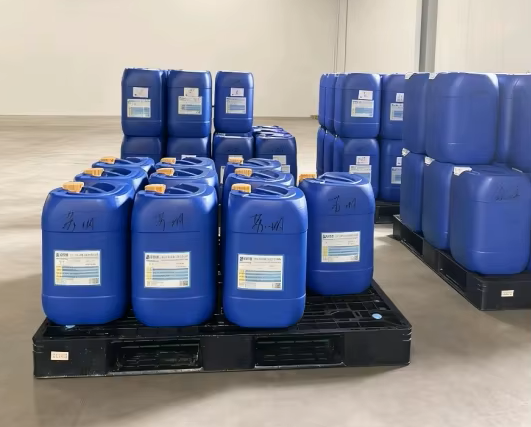
A water-based cleaning detergent is an industrial cleaning agent, that uses water along with environmentally safe surfactants, corrosion inhibitors, and other cleaning constituents. Its principle of operation is based on the use of surfactants, which reduce the water surface tension, allowing the cleaning solution to penetrate the the interstices of the dirt on the surface of the workpieces. The formula's emulsification and dispersion property allows it to remove and disperse contaminants, such as grease and dust, from both metallic and nonmetallic surfaces, and thoroughly clean them. Unlike traditional solvent-based cleaning agents that rely on the dissolution of an organic solvent, this detergent is free of toxic and harmful organic substances, and uses the physical and chemical interaction of water and additives as its core cleaning mechanism. This innovation is of paramount importance in the industrial cleaning field.
Key Technical Advantages
Water-based cleaning agents have several different technical advantages for different areas and applications in the industry. For example, when talking about something like washing and cleaning efficiency, it has the ability to wash and clean down to the microscopic level, and is very ideal for the washing and cleaning of high precision items like automobile parts, and electronic components, for example, and is able to clean and wash remnants of very stubborn oil without leaving any residues. When talking about special arrangements and optimization of formulas and agents, you can incorporate specially designed corrosion inhibitors, which allows you to safely wash and clean ferrous and nonferrous metals, such as steel, aluminum, and copper, and does not inhibit or damage the integrity and precision of the components and pieces. Probably, the most important area of advantage in the use of water-based agents in cleaning and washing is in the area of safety and the environment. There is no need to worry about flammability and explosiveness, the odor issue is greatly improved, and the overall environmental condition of the workplace and is also improved. Biodegradable components incorporated for safety, and to improve the environment, the effluent or waste stream is relatively easy to treat in order to eliminate or reduce the potential for environmental hazards during the process of production.
Practical Industrial Application Cases
Precision cleaning in the automotive industry has seen the widespread and mature application of water-based cleaning detergents. During the cleaning of engine cylinder heads and crankshafts, the cleaning detergent is paired with robotic high-pressure cleaning systems. As part of one automated cleaning solution, the actual application effect shows the ability to continuously and consistently remove 99% of processing oils and metal debris from the surface of the workpiece. That cleaning detergent solution also eliminates the quality issues resulting from uneven cleaning done by a human. During the mass production of automotive components, the robotic high-pressure cleaning systems are able to keep pace with the cleaning requirements of an automated production line and maintain a processing time per workpiece in the 3-5 minute range. Over 99.8% of the workpieces received were able to pass the subsequent vision inspections. This application case also demonstrates the adaptability of water-based cleaning detergent in a high-volume and high-precision industrial production environment.
Regulatory Compliance Overview
For a long time, Wipper Industries has been developing foam cleaning products, which has led to significant acknowledgment in the field and the Wipper research and development departments. The foam cleaning products meet the increasing number of international and national regulations in industrial cleaning and environmental protection. Wipper foam cleaning products also aligns with the EPA regulations and the EU's REACh regulations. Solvent, heavy metals, and other controlled substances with low VOCs are present in cleaning products. Wipper foam products are designed with a phosphorus-free formula and meet Water Pollution Control Laws and other local regulations to prohibit phosphorus cleaning products. Wipper foam cleaning products also pose no risk for environmental protection sanctions for industries and meet the environmental protection standards of the global marketplace.
Business Profit And Expense Minimization
Using water-based cleaning detergents in an industrial setting creates numerous expense minimization streams and profit enhancement opportunities. From a direct application cost perspective, the unit price of the cleaning detergent, water-based and biodegradable, is less expensive than most solvent-based cleaning agents. Plus, water-based cleaning detergents are multitasking, meaning they can be diltued to accommodate cleaning requirements, improving cost savings. Cleaning detergent also simplifies the waste liquid removal and treatment process. The cost of treatment is nearly 40% less than the treatment cost of solvent cleaning agents. The complimentary use of automated cleaning equipment improves production efficiency. This equipment and process automation shortens cleaning cycle and minimizes the need for rework due to cleaning poor quality cleaning. Over the years, the total cost savings for large scale manufacturers is additive and, in some instances, exceeds 10%.
Tips on Adaptability for Application and Selection
The combination of the different characteristics in an industrial production environment and the various classes of water-based cleaning detergents is essential in selecting the appropriate detergent for the cleaning of workpieces that are heavily soiled with oil such as hydraulic parts and gearboxes. In such cases, an appropriate detergent would be one of high, strong emulsification, and one that is compatible with ultrasonic cleaning equipment. For the cleaning of workpieces such as small automotive parts and electronic components, a low-concentration, low-foam cleaning detergent is preferred in order to minimize the impact of foam on the subsequent assembly of the workpiece. Additionally, the cleaning temperature and the time the workpiece is soaked in the cleaning detergent should be varied and adapted to the type of workpiece and the type of contaminant to be removed. For aluminum workpieces, cleaning is recommended to be done at temperatures that are relatively low, in the range of 40-60 degrees Celsius to avoid oxidation that may occur at higher temperatures.