EN
EN



News
What Is Industrial Cleaning and Its Importance?
Definition and Fundamental Meaning of Industrial Cleaning
The definition of industrial cleaning outlines the professional cleaning and precision treatment of industrial components and production equipment, using a combination of physical and chemical methods, cleaning and the removing of oil, debris, oxide layers and other contaminants, Industrial cleaning is further advanced than routine environmental cleaning. Cleaning is performed with extreme precision, hills of repeatability, and extreme give no damage, to the base material of parts. This type of cleaning is performed throughout the manufacturing engineering process of a manufacturing company, and is a basic prerequisite to the underwriting of the seamless function of a production line and to the quality of the finished product. Within precision manufacturing, and particularly within the manufacturing of components for motor vehicles, the degree of precision cleaning influences directly the precision of fitting and the durability of operation of the principle parts and as such cleaning is a vital segment of contemporary industrial engineering.
4 Benefits of Technology in Precision Industrial Cleaning.
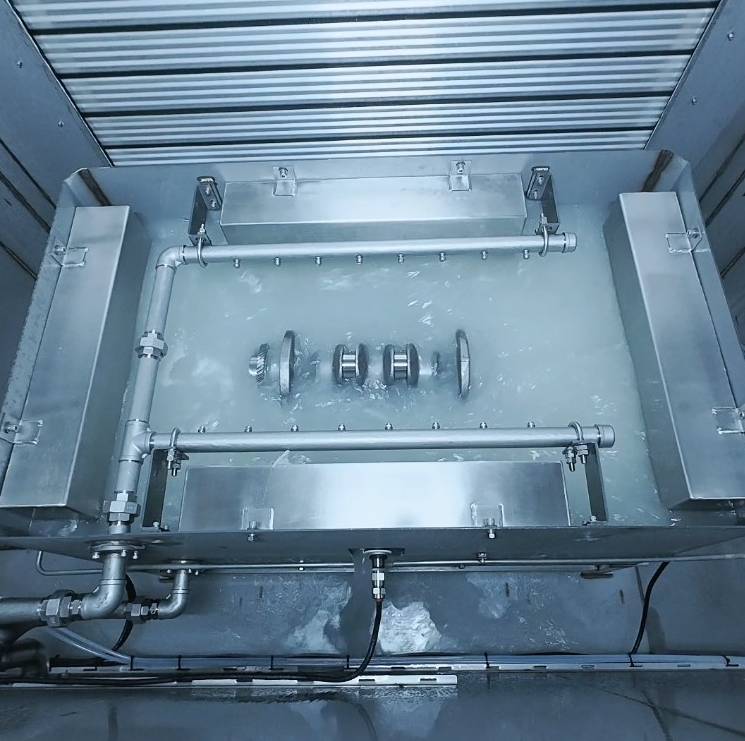
Some of the most common and newest technologies being incorporated into modern Precision Industrial Cleaning are automated robots and artificial intelligence. Other essential technologies include automated high-pressure cleaning technologies, robotic-assisted cleaning, and smart inspection technologies which all help customize cleaning solutions based on the structural characteristics of the parts. Cleaning of complex workpieces such as crankshafts and cylinder heads are achieved through robotic arm systems. These systems are capable of 360-degree cleaning with no dead angles, and adjustable high-pressure cleaning tools that are optimized for the protection of the components being cleaned. Visual inspection equipment, which is used in conjunction with cleaning equipment, provides real-time evaluation of cleaning results at the micron level. These inspections can identify defects with a 99.8% rate and are critical to maintaining the uniformity of cleaning. Specialized cleaning detergents are developed in conjunction with cleaning equipment. This provides a combination of optimized cleaning and environmental compliance.
Real World Examples in Major Industries
Industrial cleaning is first instituted into the automotive manufacturing industry. This is in light of the fact that the cleaning of components such as engine cylinder heads, crankshafts, and CVT housings, encompasses technical intricacies. During in-process production, robotic high-pressure cleaning is employed in crankshaft cleaning to expeditiously eliminate stubborn oil stains and debris from high-temperature processing. In such cases, cleaning efficacy is five times that of the traditional manual cleaning methods. In cylinder head cleaning, the robot-held brush deburring and cleaning device is able to carry out integrated processes of deburring and cleaning, thus reducing the production process steps and increasing production efficiency of the entire production line. These cases are numerous and well documented in the production of renowned automotive companies. The components that have been washed and cleaned can remarkably enhance assembly precision and diminsh the rate of failures of the end products which is a clear and straightforward representation of the potential of industrial cleaning technology in the real world.
Commercial Value for Manufacturing Enterprises
Industrial cleaning has multiple benefits in terms of commercial value for manufacturing enterprises. As far as cost reduction is concerned, automated cleaning aids in replacing numerous manual cleaning tasks, thereby also saving labor costs. Additionally, the cleaning agents' and water resources' recycling aids in further reducing daily operation costs of manufacturing enterprises. Regarding operational costs, the integrated cleaning and metal detection processes and equipment's continuous operational ability to meet mass production needs reduces production cycle time, thereby improving the production line's overall capacity. Last but not least, high standard industrial cleaning helps in establishing a good brand image in the market as it reduces rework and after-sales maintenance costs as it also increases the first time qualified number of finished products. It has been reported that for automotive parts companies, use of specialized cleaning services for core components results in over 10% increase in first time qualified components, which of course, in turn increases profitability of the company.
Worldwide Industry Cleaning Development
Most industrial cleaning equipment development has been based on three outlooks: intelligence, environmental sustainability, and globalization. The rise of the Internet of Things and Artificial Intelligence has helped create cleaning equipment that has the ability to monitor and adjust itself based on the parameters set. In order to comply with the the world's strict environmental laws and regulations, research has been and continues to be done toward the creation and application of environmentally safe cleaning agents and energy saving equipment. Research and application of environmental cleaning agents has become the center of focus toward the development of the cleaning equipment manufacturing industry. The worldwide industrial cleaning solutions also creates new business opportunities and supports the development of high-quality cleaning equipment. At this time, high precision cleaning equipment has been developed to the point of being fully operational and in use in over ten regions and countries, making worldwide cleaning equipment manufacturing industry thrive.
Quality Control in The Industry
Quality control and after sales service are critical in the industrial cleaning solutions industry. Industrial cleaning solutions manufacturers ensure quality control by performing quality control checks during the design, assembly, manufacturing, and testing phases. The quality control checks are used to the reliably and stably manufacturing the various pieces of equipment. Customized services aid business owners in the cleaning solutions industry by incorporating and adjusting equipment and process parameters based on production requirements. When it comes to after sales service, a rapid response mechanism is critical, and professional technical teams are able to provide timely on-site adjustments, maintenance, technical training, and support. This service is critical to the maintenance of a long-term relationship between industrial cleaning solutions manufacturers and their customers.