EN
EN



News
How to Conduct Fast and Accurate Inspection of Small Auto Parts?
Real Life Examples of Inspecting Small Auto Parts
Micro gears and precision connectors are small essential auto parts that are very difficult to inspect, because of the large challenges associated. An automotive component manufacturer had problems with manual inspections of tiny surface fractures on the teeth of one of the gears. They had a defect escape rate of 5% and processed only 200 parts per hour. After implementing multi view vision inspection tech, they increased their process rate to 500 parts per hour, and decreased their defect escape rate to 0.2%. Another example involves electrical connectors where a dimensional deviation of 0.02mm went undetected. This resulted in the elimination of failures in the assembly of later production steps. These examples of real life applications demonstrate how precise inspection solutions can overcome the overwhelming challenges associated with small part inspection.
Major Benefits of Vision Inspection Technology
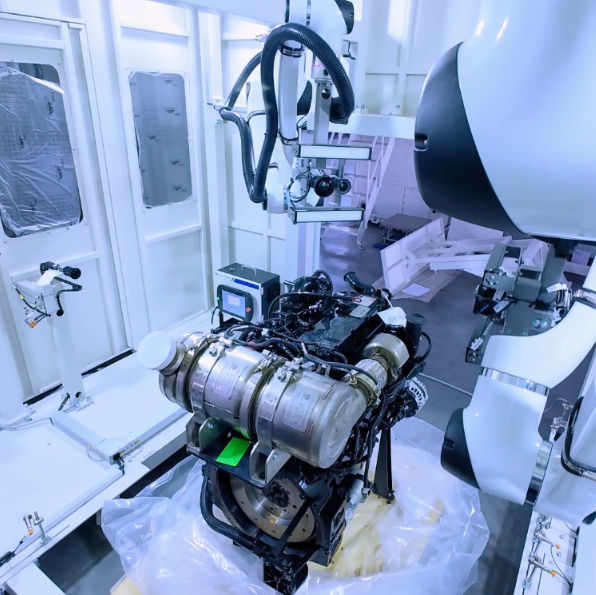
Vision Inspection Systems are capable of testing small auto parts because of certain technological features. These systems integrate multi view stereo imaging technology, which gathers information from different viewpoints. This helps to eliminate blind spots that are common with single camera systems due to the irregular shapes of small parts. Vision Systems utilize an algorithm that processes images, allowing for analysis of the parts down to the micron level. This level of precision is critical as there are certain applications that are sensitive to even the smallest design changes. These systems also utilize advanced artificial intelligence and neural networks that allow for adaptable and precise imaging of different types of materials including certain metals and plastics. This flexibility combined with advanced imaging ensures that there are no bottlenecks or slowdowns in high-speed production lines.
Practical Tips for Reliable Results
Paying attention to detail can improve the reliability of inspection outcomes. Choose flexible imaging systems. Small parts can vary greatly in their imaging requirements. Control the environment. Consistent lighting conditions help the measurement be free from shadows and obstructions. Regularly calibrate your imaging components to help maintain long term accuracy. This is especially applicable for high volume production scenarios. Improves reliability of detection. Adjust contrast levels to improve detection on rough surfaces. Implement these suggestions to improve the technical potential of your inspection systems.
Vision systems in automotive manufacturing
The automotive industry has high global standards in the quality of parts produced. These standards trickle down to the inspection technologies used for parts. As of now leading vision inspection systems are compliant with the ISO/TS 16949 standard. This is the global standard for quality management for automotive industry suppliers. For quality assurance in volume production, many of the leading automotive manufacturers and their tier 1 suppliers trust these systems. Experts state that the automotive sector can no longer depend on manual inspection for small components. Vision systems help meet the increasing regulatory and safety requirements.
Data Driven Reliability and Value
The data behind vision inspection proves its reliability. Measuring down to the micron makes it possible to identify defects and eliminate risks associated with recalls and warranty claims. Inspections being done at high speeds increases production and decreases operational costs through less downtime. Data captured during inspections reflects production and can be used to guide improvements. For example, the repetitive identification of the same defect can indicate problems in upstream manufacturing, allowing for adjustments to be made before big problems occur. Trust in an inspection and the finished parts is built through this data driven approach.
Overcoming Issues in Small Part Inspection
Inspecting small automobile components using classical methods results in several issues such as: human error due to exhaustion, the inability to match the speed of mass production, and the inability to detect very small defects. These issues can be solved through vision inspection. There is no human error in sight, and high speed processing is able to keep pace with the most modern production lines. Advanced image analysis goes even further, penetrating the limitations of human sight to find defects that are undetectable to the human eye. Vision inspection is also highly adaptable, as its adjustable settings let it inspect various sizes and shapes of components. Recent automation advancements turn inspection from a bottleneck into a no value added to a value added process.